

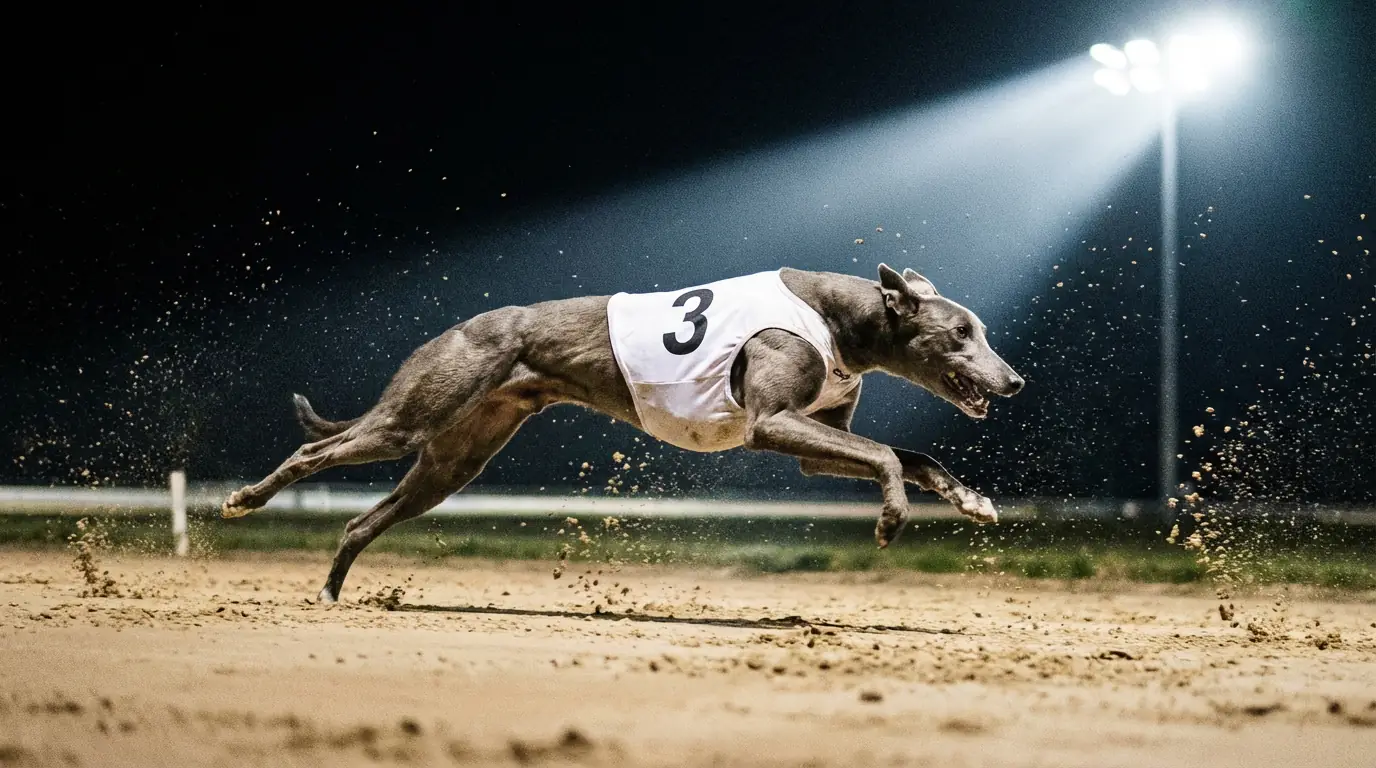
Speed Ratings Strip the Noise from Raw Times
A raw finishing time in greyhound racing carries noise from at least half a dozen sources: the track, the going, the wind, the pace of the race, interference from other dogs, and the specific characteristics of the running surface on that particular night. Two dogs that clock identical times at different tracks, on different days, in different conditions have not necessarily run equally fast. Speed ratings exist to solve that problem — they adjust raw times to produce a standardised figure that reflects the dog’s true performance, stripped of the variables that distort the clock.
For punters, speed ratings are the most powerful comparative tool available. They allow you to rank dogs from different tracks, different grades, and different conditions on a level playing field. A dog rated 95 at Romford is directly comparable to a dog rated 93 at Towcester, even though the raw times at those two tracks bear no meaningful relationship to each other. The rating translates the raw data into a common language — and that language is the foundation of serious form analysis.
How Greyhound Speed Ratings Are Calculated
Speed rating systems vary in their specific methodology, but the underlying principle is consistent: take the raw finishing time, adjust it for known variables, and produce a normalised figure that represents the dog’s actual performance level.
The first adjustment is for track standard. Each track has an inherent standard time for each distance — the typical time a dog of average ability would record over that trip at that venue. This standard reflects the track’s size, surface, geometry, and any other permanent characteristics that affect raw times. The speed rating measures how far above or below the track standard a dog’s actual time falls. A dog that beats the standard by a large margin receives a high rating; one that runs close to or below the standard receives a lower one.
The second adjustment is for going. As discussed elsewhere, the going — the condition of the track surface — has a measurable impact on times. Dry, firm going produces faster times; wet, heavy going produces slower times. Speed rating systems incorporate a going allowance that adjusts the raw time based on the estimated effect of the going on that particular day. A time of 29.60 on heavy going might be adjusted to an equivalent of 29.30 on standard going, which would produce a higher speed rating than the raw time suggests.
Some systems apply additional adjustments for wind, race pace, and interference. A dog that was impeded at the first bend and lost ground has a raw time that understates its actual ability. A sophisticated speed rating system might add a correction for the estimated impact of the interference, producing a rating that reflects what the dog would have achieved with a clear run. These additional adjustments require more data and more subjective judgement, which is why different rating systems can produce different figures for the same performance.
The output is typically a single number, sometimes expressed as a whole number and sometimes to one or two decimal places. Higher numbers indicate faster performances. The scale varies between providers — some use a 0-120 range, others use different benchmarks — but the relative ranking within any given system is what matters. A dog rated 98 in system A is not directly comparable to a dog rated 98 in system B, but a dog rated 98 in system A is faster than a dog rated 91 in system A. Consistency within a single system is the key to meaningful comparison.
The calculation process for most published speed ratings is proprietary — the exact formula is not disclosed by the provider. This opacity is understandable (the methodology is the product’s intellectual property) but it means punters cannot fully verify the adjustments or identify potential weaknesses in the approach. The practical response is to use speed ratings as one input among several, not as a single oracle. Cross-reference ratings with your own form analysis, trap draw assessment, and conditions evaluation to build a rounded picture.
Applying Speed Ratings to Race Selection
The simplest application of speed ratings is sorting the field. Before a race, look up the best recent speed rating for each runner and rank them. The dog with the highest rating has produced the best adjusted performance over its recent outings. If that dog is also well drawn and in a grade appropriate to its ability, it is the starting point for your analysis.
But speed ratings should never be applied mechanically. The highest-rated dog does not always win, and blindly backing the top-rated runner in every race is not a profitable strategy. Ratings reflect past performance; races are decided in the present. A dog that posted a 97 rating three weeks ago might have been at peak fitness then and could be less sharp now. A dog rated 89 that has been improving steadily and is drawn perfectly tonight could outrun its previous best.
The most productive use of speed ratings is identifying discrepancies between the ratings and the market. If the top-rated dog in the field is also the shortest price, the market has already priced in the rating advantage — there may be no value. If the second or third highest-rated dog is available at a longer price because its recent form figures look less impressive than the top-rated dog’s, the rating provides evidence that the longer-priced dog is being undervalued. This is where speed ratings convert into betting value: when the adjusted performance data tells a different story from the raw form.
Speed ratings are particularly useful for cross-track comparison. When a dog transfers from one track to another — a common occurrence in open races and competitions — raw times from the previous track are meaningless at the new venue. Speed ratings normalise for the track difference, allowing you to assess the dog’s ability relative to the local competition. A dog with a 95 rating arriving at a track where the typical A2 grade produces ratings of 90-93 is clearly above the level, even if its raw times from the previous track look ordinary.
For exotic bets, speed ratings help narrow the contenders for the placed positions. If the top three speed-rated dogs in a race are clearly separated from the bottom three by five or more rating points, the forecast and tricast is likely to involve those top three in some order. The ratings provide a quantitative basis for excluding weaker runners from your combinations, reducing the cost and improving the expected value of the bet.
Where to Find Reliable Greyhound Speed Ratings
Several providers publish speed ratings for UK greyhound racing, each with its own methodology, coverage, and price point.
Timeform is the most established name in greyhound speed ratings. Their ratings are widely regarded as the industry standard, produced using a proprietary methodology developed over decades of data analysis. Timeform ratings are available through their subscription service and cover all major UK tracks. For punters willing to invest in a data source, Timeform is the default choice.
The Racing Post publishes its own performance ratings as part of its greyhound form data, available online and in print. These ratings are calculated using a different methodology from Timeform’s and may produce different rankings for the same race. Using both sources and noting where they agree and disagree can sharpen your analysis — when two independent rating systems identify the same dog as the best in the field, the confidence level increases.
Specialist greyhound data sites — including Greyhound Stats and various independent analysts — produce their own ratings, sometimes with a focus on specific tracks or competitions. These niche sources can offer insights that the major providers miss, particularly for track-specific conditions or for meetings that receive less coverage in the mainstream data.
For punters who want full control over the methodology, building your own speed ratings is possible but labour-intensive. It requires collecting raw time data, establishing track standards, calibrating going allowances, and testing the system against actual results. The payoff is a rating system tailored to your specific tracks and betting style, but the upfront investment in time and data is considerable.
The Speed Signal: Adjusted Time as Truth
Raw time is a fact. Speed ratings are an interpretation of that fact — an attempt to answer the question: how fast did this dog actually run, once you strip away everything that had nothing to do with the dog’s own ability?
No rating system answers that question perfectly. The adjustments are estimates, the going allowances are approximations, and the interference corrections involve judgement calls that reasonable analysts might disagree on. But the effort to answer the question — to get closer to the true performance beneath the noise — is what separates analytical betting from surface-level form reading.
The punters who use speed ratings consistently see races differently from those who rely on raw times alone. They see a dog with a slow raw time and recognise that the conditions explained the clock. They see a fast raw time and ask whether the going was unusually quick. They compare dogs from different tracks without the false confidence that comes from treating incompatible numbers as equivalent. The rating is not the final word — it is the starting point for a more informed conversation with the data. And that conversation, conducted honestly and consistently, is what produces long-term returns.
