
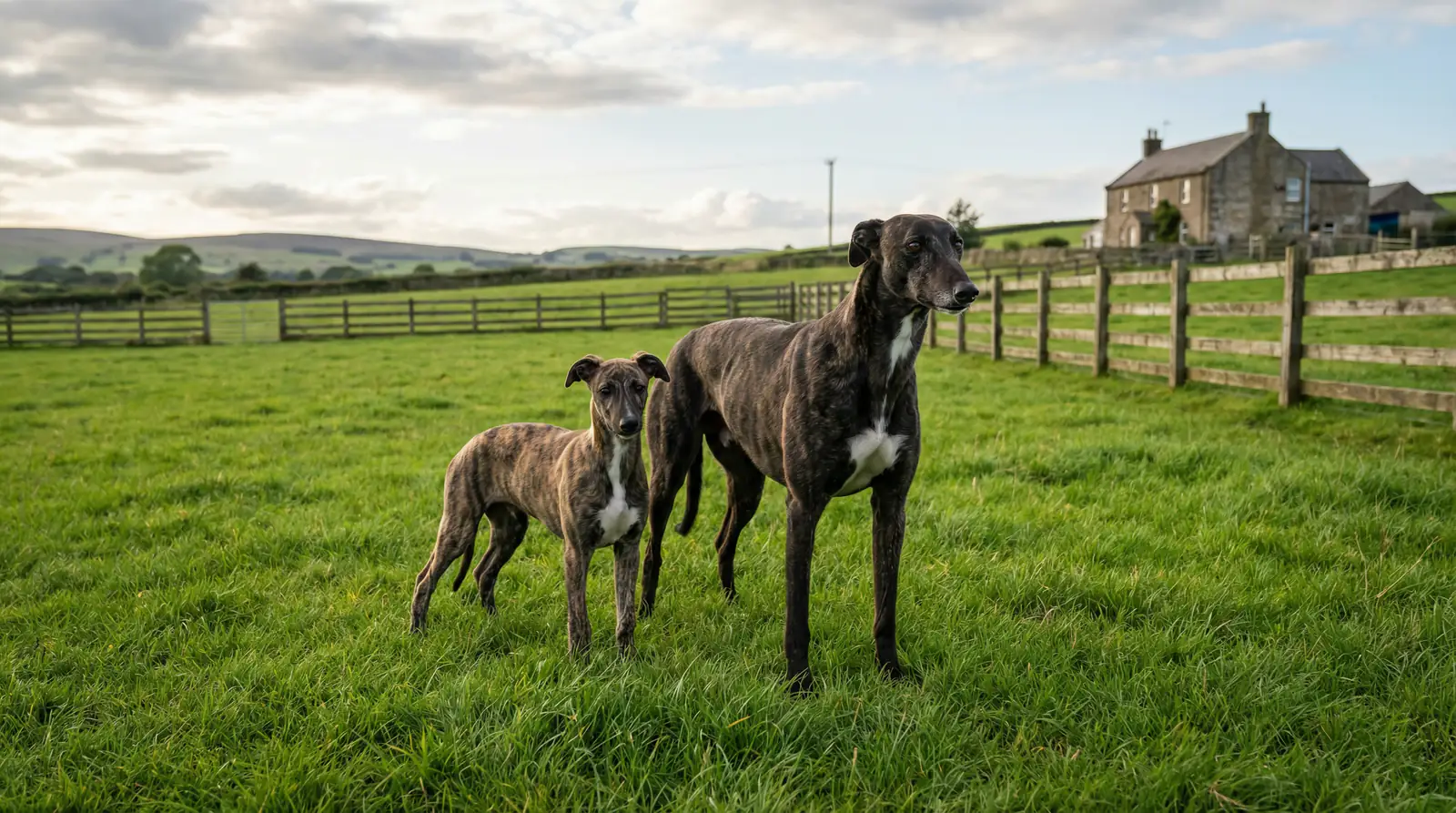
Pedigree Isn’t Just for Show — It’s for Speed
Every racing greyhound carries a pedigree that traces its parentage back through generations of runners. For most punters, the pedigree is a curiosity — a name on the race card that gets glanced at and forgotten. For punters who understand what breeding data reveals, it is an additional information layer that helps predict performance in situations where conventional form analysis falls short.
Breeding does not override form. A dog with a prestigious pedigree but poor recent results is still a poor bet on current evidence. But in specific circumstances — young dogs with limited form, runners stepping up in distance for the first time, dogs entering open races against unfamiliar opposition — the breeding provides clues about potential that the form book has not yet confirmed. In these situations, the punter who knows the bloodlines has an analytical tool that the rest of the market largely ignores.
How Sire Lines Influence Racing Ability
The sire — the father — is the most influential single factor in a greyhound’s genetic profile for racing purposes. Sire lines pass on physical characteristics, running style tendencies, and distance preferences with enough consistency that experienced breeders and punters can make meaningful predictions about the offspring of particular stud dogs.
Certain sires are known for producing fast, early-paced offspring — dogs that break sharply from the traps and establish early leads. Others consistently produce dogs with stamina and strong finishing speed. Some sire lines are associated with a particular running style — the offspring of certain dogs tend to be railers, while others produce wide-running progeny. These associations are not absolute rules — individual variation is substantial — but they are statistical tendencies supported by the aggregate data across hundreds of offspring.
The dominant sire lines in UK and Irish greyhound racing shift over time as new stud dogs emerge and older ones retire from breeding. At any given point, a handful of sires dominate the racing population, and their offspring are disproportionately represented in the results at all levels. The offspring of the leading sires tend to be well-documented in the racing press and breeding databases, which means information about their typical characteristics is accessible to punters who seek it out.
The dam — the mother — contributes equally to the genetic makeup but receives less attention in most pedigree analysis. This is partly because dam lines are harder to track (most female greyhounds produce fewer offspring than successful stud dogs), and partly because the racing performance of the dam herself is often a more useful indicator than her bloodline. A dam that raced successfully at staying distances is more likely to produce offspring with stamina than one whose racing career was limited to sprints, regardless of the specific sire used.
The combination of sire and dam produces the individual dog’s genetic potential, but that potential is only realised through training, conditioning, and race experience. A dog from an exceptional pedigree that is poorly trained or mismanaged will not perform to its genetic ceiling. Conversely, a dog from a modest pedigree that receives expert preparation can outperform expectations. Breeding sets the upper bound of potential; everything else determines how close the dog gets to that ceiling.
Sprint Bloodlines vs Staying Bloodlines
The most practically useful distinction in greyhound breeding for punters is between sprint bloodlines and staying bloodlines. Certain sire lines have a documented tendency to produce dogs that excel at shorter distances, while others consistently produce dogs that handle middle-distance and staying trips.
Sprint sires tend to produce offspring with explosive early acceleration, high top speed over short distances, and a physical build — lighter frame, leaner muscle — that favours rapid acceleration and sharp bend work. These dogs often dominate sprint grades and perform well in the early stages of standard-distance races, but they may lack the stamina to sustain their speed over longer trips. When an offspring of a known sprint sire is entered in a race over 630 metres or more, the breeding raises a legitimate question about stamina suitability — even if the dog’s form over standard distances has been impressive.
Staying sires produce a different physical and performance profile. Their offspring tend to be heavier, more powerful through the hindquarters, and built for sustained effort rather than explosive acceleration. They often show a running style that involves moderate early speed followed by a strong, sustained run through the second half of the race. These dogs may not lead from the traps in sprint races, but over staying distances they grind down faster dogs that cannot maintain their early speed over the full trip.
The practical application is in distance-change scenarios. When a dog moves from standard distance to a staying trip for the first time, its form cannot tell you whether it will handle the extra distance — it has never run that far in competition. But its breeding can provide a clue. A dog by a proven staying sire, out of a dam that raced successfully over middle distances, has a genetic profile that suggests stamina suitability. A dog by a sprint sire with no staying form in the maternal line has a less favourable profile for the distance step-up. Neither case is conclusive, but the breeding shifts the probability — and in a sport where edges are marginal, shifted probabilities are worth incorporating into the analysis.
Using Breeding Data in Betting Decisions
Breeding data is most valuable when conventional form data is thin or inconclusive. There are three specific scenarios where pedigree analysis adds meaningful information to the betting assessment.
The first is young dogs with limited form. A puppy with three career races has almost no form to work with. The times and finishing positions from those runs provide some information, but the sample is too small for confident conclusions. The breeding, however, provides a context that the limited form does not. If the puppy is by a sire whose offspring typically improve rapidly between their fifth and tenth starts, the current form might understate the dog’s trajectory. If the sire’s progeny are known for sharp early speed, the puppy’s slow trap breaks in its first few races might be developmental rather than permanent. These breeding-based inferences do not replace form analysis — they supplement it in the period before the form book has enough data to speak clearly on its own.
The second scenario is distance changes. As discussed above, when a dog faces an untested distance for the first time, the breeding provides the best available clue about suitability. The market prices distance-change runners primarily on their existing form, which was recorded at a different distance. Punters who incorporate breeding data can identify dogs whose genetic profile supports the distance move — and who are therefore better prospects than their current form suggests — or dogs whose breeding raises doubts that the market has not priced in.
The third scenario is open races and classics, where dogs from different tracks and different form backgrounds meet for the first time. In a standard graded race, the dogs have usually been competing against each other recently, and the form lines are interrelated. In an open race, the runners arrive from different tracks with no shared form. Breeding provides a cross-reference point: if two dogs from different tracks are by the same sire and have similar pedigree profiles, their genetic ceilings are likely comparable, and the speed ratings from their respective tracks can be assessed with greater confidence.
The discipline is to use breeding data as one input, not as a decision-maker. A dog with perfect breeding but terrible form is still a bad bet. A dog with unremarkable breeding but outstanding form is still a good bet. Breeding analysis operates at the margins — tipping borderline decisions, adding confidence to uncertain assessments, and flagging risks that the numbers alone do not reveal.
The Bloodline Angle: Genetics as Data
Breeding analysis in greyhound racing occupies a similar space to trainer form analysis: almost everyone acknowledges its relevance, almost nobody tracks it systematically, and the gap between acknowledgement and action is where the value sits.
The market does not price bloodlines. The odds on a race are set by form, grade, and public money. The sire’s name is on the race card, but it does not move the betting market. A puppy by the season’s leading staying sire, running over a staying trip for the first time, is priced the same as one by an unknown sire with the same form figures. The breeding data tells a different story — one that the market is not listening to.
Building bloodline awareness is a gradual process. Start by noting the sire of every dog you assess over a period of months. When a name appears repeatedly — the same sire producing winner after winner at staying distances, or the same sire’s offspring consistently showing sharp trap speed — you are observing a breeding pattern that has practical betting applications. Over time, these observations accumulate into a working knowledge of the major sire lines and their tendencies, which becomes an automatic part of your form assessment.
Genetics is data. The race card already contains it. The question is whether you are reading it.