
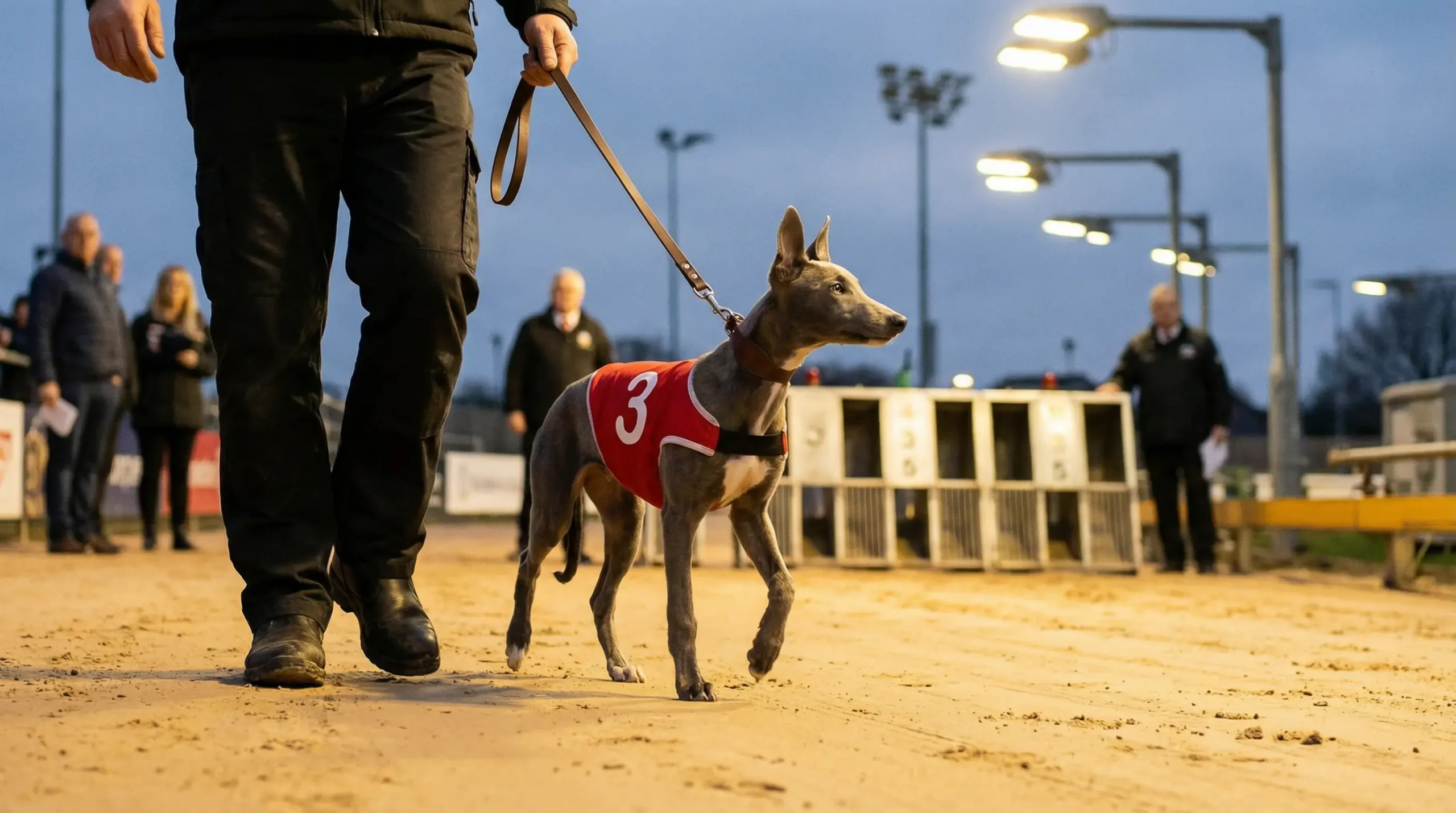
Young Dogs, Big Potential, Hidden Value
Puppy racing is where the next generation of greyhound stars emerges — and where astute punters can find value that the broader market has not yet caught up with. Young greyhounds, typically between 15 months and two years of age, race in dedicated puppy events that serve as the proving ground for future classic contenders. The form book on these dogs is thin, the market assessments are often crude, and the potential for rapid improvement means that the dog you see losing by three lengths today could be winning by four lengths in a month.
For punters, puppy racing occupies a specific niche. The analytical tools that work for graded adult racing — sectional times, long-term form trends, trainer strike rates over hundreds of runs — are less reliable when applied to dogs with limited racing history. But this uncertainty is precisely what creates value. The market struggles to price young dogs accurately because the data is sparse, which means the odds frequently diverge from the actual probabilities. Punters who understand the dynamics of puppy racing and know what to look for in developing greyhounds can exploit that gap.
How Puppy Greyhound Racing Works in the UK
Puppy races in the UK are governed by the same GBGB rules as adult racing, with additional age-based eligibility criteria. Dogs are classified as puppies based on their date of birth, and dedicated puppy events are restricted to dogs within the qualifying age range. The exact age boundaries can vary by competition, but broadly, puppy racing covers the period from a greyhound’s first competitive outings to its progression into the open adult grades.
Puppy races are graded separately from adult racing. A dog racing in a puppy grade is competing against other dogs of similar age and development, not against experienced adult runners with hundreds of races behind them. This segregation is essential for both welfare and competitive fairness — a 16-month-old dog with ten career starts cannot be expected to compete on equal terms with a four-year-old veteran with 200 races of experience.
The grading within puppy racing follows the same principles as adult racing: dogs are grouped by calculated time over the standard distance at their track, with higher grades containing faster dogs. Promotion and relegation occur as dogs win or lose, and the best performers graduate quickly through the puppy grades before transitioning into the open adult programme.
Schooling and early trials are the precursors to puppy racing. Before a young greyhound is eligible to race, it must pass schooling trials — supervised runs at licensed tracks that assess the dog’s ability to chase the hare, break from the traps, and navigate the bends safely. These schooling results are not always publicly available, but trainers and insiders use them to gauge a dog’s potential before its first competitive race. When a dog’s schooling times become known to the public — through track reports, tipster networks, or racing media — the early-price market adjusts accordingly.
The transition from puppy to adult racing is a critical period. Dogs that have dominated puppy events may struggle initially against older, more experienced opponents. Others make the transition smoothly, their raw talent compensating for the lack of racing maturity. Tracking how dogs handle this graduation — and understanding that the first few adult runs are often developmental rather than competitive — helps you interpret the form of recent graduates accurately.
Derby Trials: The Road to the Big Race
Derby trials are the formal qualification pathway for the major classic competitions. The English Greyhound Derby, the Irish Derby, and other prestigious events require dogs to progress through a series of trial rounds before reaching the final. These trials are among the most closely watched events in the greyhound racing calendar, because they reveal not just which dogs are fast enough to compete at the highest level, but how they handle the specific track, distance, and competitive pressure of the classic.
The trial process typically begins several weeks before the final. Dogs nominated by their trainers compete in first-round heats, with the winners and fastest losers advancing to the next stage. As the rounds progress, the fields narrow, the quality intensifies, and the form produced in later trials becomes increasingly reliable as a guide to the final itself.
For punters, each trial round generates fresh data. The times recorded, the running styles displayed, the trap-speed exhibited, and the way each dog handles the specific track and distance are all available for analysis. Early-round trials are particularly valuable because the market has limited information to work with — the ante-post odds on the overall competition are based largely on pre-trial form and reputation. A dog that produces a standout performance in the first round, against the competition and on the track where the final will be run, is generating evidence that the ante-post market may not have fully priced.
Trial form must be interpreted carefully. Not every dog runs at full effort in early rounds — some trainers instruct their dogs to be conservatively ridden, saving peak performance for the later stages. A comfortable win by two lengths in a trial heat may not represent the same level of effort as a hard-fought neck victory, even though the winning margin is larger. Watching the trials visually, rather than relying solely on times and margins, gives you insight into which dogs were extended and which had more in reserve.
The market dynamics around derby trials create specific betting opportunities. Ante-post prices on the overall competition shift after each round, and the speed of adjustment varies. A dog that qualifies impressively might see its ante-post price halve within hours. A dog that qualifies scrappily, perhaps after a slow start or first-bend trouble, might see its price drift even though the underlying ability was clearly evident to anyone who watched the race. These post-trial price movements are where prepared punters find the most value in the classic calendar.
Betting on Young Greyhounds: Opportunities and Risks
The opportunity in puppy racing is the information asymmetry. Young dogs have limited form, which means the market is pricing them on incomplete data. A dog with two career races — one win and one second — has a form line that could represent anything from a future champion to a moderate animal that had an easy first race. The odds assigned to this dog are, by necessity, a rough estimate, and rough estimates create mispricing in both directions.
The most productive approach to betting on young greyhounds is to focus on improvement trajectory rather than absolute performance. A puppy that finished fourth in its first race, third in its second, and second in its third is showing a clear upward curve. The finishing positions are improving, and the times are likely improving too. This trajectory suggests a dog that is adapting to competitive racing and has not yet reached its peak — a dog whose next run could produce another step forward. The market often undervalues this trajectory because the bare form figures — 4-3-2 — do not look as impressive as a dog with 1-1-1.
Trap speed is more volatile in puppy racing than in adult racing. Young dogs are still learning to break from the traps, and their consistency from box to box can vary dramatically. A puppy that missed the break badly in its last race might break sharply next time, simply because it has had another trial or two in the traps since then. This unpredictability adds risk, but it also creates value when a dog with good raw speed but poor recent trap breaks is priced as though the slow starts are permanent rather than developmental.
The risk in puppy betting is equally real. Young dogs are more susceptible to injury, more likely to produce erratic performances, and more difficult to assess on thin form. The improvement that looks like a trajectory could plateau or reverse. The schooling times that suggested elite potential might not translate to competitive racing. Staking should reflect this uncertainty — smaller bets, wider selections, and a tolerance for higher variance than you would accept in graded adult racing.
The Futures Bet: Spotting Tomorrow’s Stars
There is a particular satisfaction in identifying a talented puppy before the market recognises its potential, backing it at generous ante-post odds for a future classic, and watching it progress through the trials into the final. It combines analytical skill with patience — two qualities that the best greyhound punters possess in abundance.
The punters who are best at spotting emerging talent share a common approach: they watch puppy racing regularly, they track the schooling reports and early trial results, and they build a mental database of promising dogs before those dogs appear on the public radar. By the time a puppy produces a headline-grabbing performance that attracts market attention, the prepared punter has already taken the price and locked in value that is no longer available.
Not every promising puppy fulfils its potential. Many do not. The attrition rate between early-stage talent and classic-race performance is high, and the ante-post losses on dogs that fail to qualify are a real cost. But the prices available on young dogs before the market catches up are long enough to absorb those losses and still produce a net return — provided you are selective, disciplined with your stakes, and willing to accept that most of your futures bets will not pay off. The ones that do pay off at prices the rest of the market wished it had taken.