
The Calendar That Sets the Betting Year
UK greyhound racing runs almost every day of the year, with licensed meetings scheduled from early afternoon through to late evening across the country. But within that relentless schedule, certain events stand above the nightly graded cards — the major competitions, classic races, and seasonal showpieces that attract the best dogs, the biggest crowds, and the deepest betting markets.
Knowing when these events fall in the calendar is practical, not ceremonial. Major races offer different betting dynamics from standard graded racing: larger fields in early rounds, open-race form that crosses track boundaries, ante-post markets that open weeks or months in advance, and prize money that attracts dogs from kennels across the country. The calendar shapes the rhythm of the sport and, by extension, the rhythm of intelligent betting.
Whether you focus on the big events or prefer the graded meetings in between, understanding the seasonal structure of UK greyhound racing gives you context that makes every race card easier to read.
Major UK Greyhound Events and Derbies
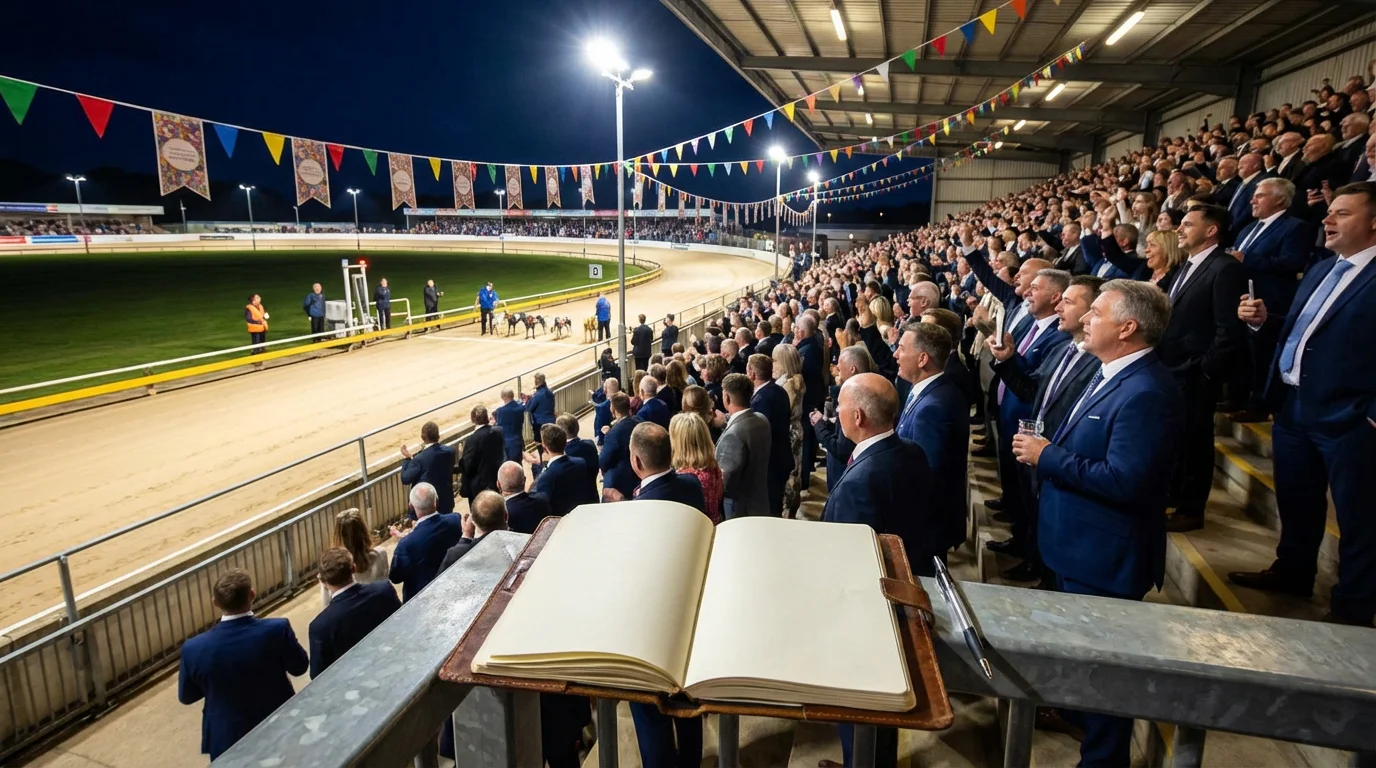
The English Greyhound Derby is the sport’s flagship event — the most prestigious and valuable competition in British greyhound racing. First held at White City Stadium in 1927 and run at Wimbledon from 1985 to 2016, the Derby has been held at Towcester since 2017 (with a brief move to Nottingham in 2019–2020). The Derby takes place over 500 metres and runs through a series of heats, quarter-finals, semi-finals, and a final that typically falls in the summer months (GBGB). The prize money for the winner — £175,000 as of the 2025 edition (Towcester Racecourse) — is the largest in the sport, and the betting market around the Derby is deeper and more active than for any other greyhound event. For punters, the Derby offers unique opportunities: form from the early rounds provides data on how dogs handle the track, the grading system is irrelevant because the field is entirely open, and the market liquidity allows for more precise value assessment.
The Irish Greyhound Derby, while technically outside the UK, draws significant interest from British punters and frequently features dogs that have raced on the UK circuit. The cross-border traffic means that form from the Irish Derby can be relevant when those dogs return to UK tracks later in the season.
The St Leger is the sport’s classic staying event, run over 730 metres at Nottingham, testing stamina and tactical racing. The St Leger takes place in September and draws the best stayers in the country (Racing Post). For punters who specialise in staying form, the St Leger is the pinnacle — the race where deep stamina analysis pays the highest dividends.
The Oaks is the premier competition for female greyhounds, following a format similar to the Derby with heats progressing to a final. It has been held at various venues over the years, most recently at Dunstall Park in Wolverhampton since 2025 (GBGB).
The Cesarewitch is another prestigious competition, often run over middle distance, and the Scurry Gold Cup caters to sprint specialists. Together with the Derby, St Leger, and Oaks, these events form the core calendar of classic greyhound competitions.
Beyond the named classics, there are hundreds of open races and invitation events throughout the year at tracks across the country. These provide regular opportunities for elite dogs to compete outside the standard grading framework and offer betting markets that differ from the predictable rhythms of nightly graded racing. Track-specific feature events — local derbies, anniversary cups, and seasonal competitions — fill the calendar between the national classics and often produce competitive racing with attractive betting opportunities.
Keeping a calendar of major events is a simple exercise: the GBGB publishes an annual calendar (gbgb.org.uk), and the Racing Post lists upcoming features as part of its regular greyhound coverage. Marking the dates of the major competitions gives you lead time to research the likely contenders and identify ante-post opportunities before the public market fully forms.
Ante-Post Betting on Major Greyhound Races
Ante-post betting — wagering on a race before the final field is confirmed — is available on most major greyhound events. Bookmakers typically open ante-post markets for the Derby and other classics weeks or months in advance, with odds available on dogs that are expected to compete based on their open-race form and connections.
The appeal of ante-post betting is the price. Odds in ante-post markets are generally longer than they will be once the dog has qualified through the heats, because the market carries additional uncertainty — the dog might not make the final, might get injured, or might underperform in the qualifying rounds. If you have strong conviction about a dog’s ability and it subsequently qualifies and runs well, the ante-post price you locked in could be significantly better than the starting price on the day of the final.
The risk is equally clear. Ante-post bets are settled on a no-refund basis — if your dog does not run in the final for any reason, you lose your stake. There are no Rule 4 deductions, no void bets, and no consolation returns. The dog could be withdrawn due to injury in the semi-final, and your ante-post bet on the final is gone. This risk premium is what justifies the longer odds, and it is also what makes ante-post betting unsuitable for large stakes.
The most productive ante-post approach involves dogs with a high probability of reaching the final. Focus on runners with strong open-race form, from top kennels with a track record in the specific competition, drawn favourably in the early rounds. The ideal ante-post selection is a dog that is almost certain to progress through the heats and has genuine claims in the final — not a speculative outsider that might not survive the first round.
Timing matters in ante-post markets. Early prices tend to be more generous because the market is thin and uncertainty is highest. As heats are run and the picture clarifies, odds on the survivors shorten. Taking a position early — when your analysis gives you confidence in a specific dog — captures value that evaporates as the competition progresses.
Seasonal Trends in UK Greyhound Racing
Greyhound racing is an outdoor sport, and seasonal conditions affect the racing in ways that punters should factor into their analysis across the year.
Summer racing typically features faster times. The warmer weather produces drier, firmer track surfaces that allow dogs to maintain top speed through the bends. The longer daylight hours mean more meetings are scheduled in the evening when conditions are generally favourable. Summer is also when the major classic events take place, concentrating the highest-quality racing into a period that runs roughly from May through September.
Winter racing brings slower surfaces. Rain, frost, and cold temperatures change the going, producing heavier conditions that favour different types of dogs. Stayers and dogs with strong physical conditioning tend to handle winter conditions better than lighter sprinters. Times across the board are slower in winter, which means comparing a dog’s December times to its July form requires adjustment. A dog that looks to have lost speed based on raw clock times may simply be racing on a slower surface.
The transitional months — spring and autumn — produce variable conditions and are often the most challenging periods for form analysis. The going can change rapidly within a single meeting as rain arrives or the temperature shifts, making pre-race assessments less reliable. Experienced punters treat transitional periods with additional caution, reducing stakes or focusing on races where the likely conditions are clearest.
Kennel rhythms also follow seasonal patterns. Many trainers rest their top dogs during certain periods, then bring them back for specific campaigns. A dog that has been absent for six weeks in late winter and returns in March is likely being prepared for the summer classic season. Recognising these patterns helps you anticipate when dogs are being aimed at particular targets and when they are running as preparation rather than with a winning intent.
Marking the Calendar: When the Smart Money Pays Attention
The greyhound racing calendar rewards punters who plan ahead. The major events are announced well in advance. The ante-post markets open with generous prices. The qualifying rounds produce form data that is unavailable anywhere else. And the finals themselves — the biggest races in the sport — generate betting markets with liquidity deep enough to absorb significant stakes at fair prices.
Treating the calendar as a strategic tool rather than a list of dates changes how you allocate your betting time and bankroll across the year. The quiet months between major events are for building your form database, tracking emerging dogs, and refining your analysis on the nightly graded cards. The event months are for deploying that preparation into the deeper markets where the returns are largest.
A simple calendar pinned next to your form guide — with the major dates marked, the ante-post windows noted, and the seasonal conditions flagged — is a planning tool that most punters never create. The ones who do have a structural advantage: they know what is coming, they know when the opportunities peak, and they arrive prepared while the rest of the market scrambles to catch up.